
Twenty-six faculty members will be recognized for their teaching, scholarship, service and creative activities at a dinner Oct. 1 at the president’s residence.
Awards to be presented include four Distinguished University Professorships, five Distinguished Faculty Achievement Awards, five Faculty Recognition Awards, two Amoco Foundation Faculty Awards for Undergraduate Teaching, a University Press Book Award, a Distinguished Faculty Governance Award, two Regents Awards for Distinguished Public Service, a Distinguished Research Scientist Award, and two Research Scientist Achievement Awards.
In addition, awards will be presented in three new categories: the Jackie Lawson Memorial Faculty Governance Award, the University Librarian Achievement Award and the University Librarian Recognition Award.
Distinguished University Professorships will be presented as follows:
• Frank Murphy Distinguished University Professor of Law and Psychology: Phoebe Ellsworth, Robert B. Zajonc Collegiate Professor, Department of Psychology, and Kirkland and Ellis Professor of Law
• James V. Neel Distinguished University Professor of Internal Medicine and Human Genetics: Dr. David Ginsburg, professor of internal medicine and human genetics
• Charles Gibson Distinguished University Professor of History: Rebecca Scott, the Frederick G. L. Huetwell Professor of History and Law
• Leonard Bernstein Distinguished University Professor of Music: Bright Sheng, professor of composition
Distinguished University Professors have attained national and international recognition for originality and scholarly achievement, and have demonstrated teaching skills and breadth of interest, as well as depth of achievement in their fields. The four will receive annual supplements of $3,000 for salary and $5,000 for research.
Distinguished Faculty Achievement Awards, recognizing extraordinary achievements in teaching, research, creative work in the arts, public service or other activities that bring distinction to the University, will be presented to:
• David Engelke, professor of biological chemistry
• James House, professor of sociology
• John Jonides, professor of psychology
• William Paulson, professor of romance languages and literatures
• Robert Smith, Altarum/ERIM Russell D. O’Neal Professor of Engineering, Department of Industrial and Operations Engineering
Each recipient will receive a $1,500 stipend.
Five faculty will receive Faculty Recognition Awards:
• David Mooney, professor of biologic and materials sciences, School of Dentistry, and professor of chemical and biomedical engineering, College of Engineering
• Patricia Reuter-Lorenz, professor of psychology
• Karen Smith, professor of mathematics
• Michael Schoenfeldt, professor of English
• Michael Wellman, professor of computer science and engineering
Faculty Recognition Award recipients have made substantive contributions to the University through significant achievements in research and other scholarly activities; demonstrated excellence in teaching, advising and mentoring; and have participated in service activities. Each recipient will receive a $1,000 stipend.
Amoco Foundation Faculty Awards for Undergraduate Teaching, which recognize excellence in undergraduate education, will go to Trachette Jackson, associate professor of mathematics, and Karin Martin, associate professor of sociology and women’s studies. The Amoco Award stipend is $1,000.
Linda Gregerson, the Frederick G. L. Huetwell Professor and professor of English, will receive the University Press Book Award for her book “Negative Capability: Contemporary American Poetry” (U-M Press, 2001). She will receive $1,000.
Dr. Charles B. Smith, professor of pharmacology, will receive the Distinguished Faculty Governance Award, which recognizes outstanding leadership in faculty governance over a period of years, with an emphasis on University-wide service.
He will receive $1,500.
The recipient of the newly created Jackie Lawson Memorial Faculty Governance Award will be Donald Bord, professor of natural sciences, U-M-Dearborn. The Lawson Award recognizes exceptional distinction reflected in faculty governance service to the entire University that reaches beyond the local campus confines of Ann Arbor, Dearborn and Flint. He will receive $1,000.
Billy Evans, professor of chemistry, and Scott Kurashige, assistant professor of history and American culture, will receive the Regents’ Award for Distinguished Public Service. The award has a $1,000 stipend.
The University Librarian Achievement Award and the University Librarian Recognition Award, will be presented to Jean Loup, special collections librarian, University Library, and Susan Hollar, senior associate librarian, Harlan Hatcher Graduate Library, respectively.
The University Librarian Achievement Award and $1,500 stipend are presented for exceptional distinction reflected in active and innovative career achievements in library, archival or curatorial services. The University Librarian Recognition Award and $1,000 stipend is presented for early career achievement in those categories.
Michael Combi, senior research scientist, Department of Atmospheric, Oceanic and Space Sciences, will be honored with the Distinguished Research Scientist Award. The award recognizes a research scientist or senior research scientist for exceptional scholarly achievement: the discovery and dissemination of new knowledge, the development of innovative technology, or the development of concepts that lead to significant advances in science, education, health, the arts or humanities. The award includes a $3,000 honorarium.
The Research Scientist Achievement Award, which carries a $1,500 stipend, will be presented to Khalil Bitar, senior research scientist, Department of Pediatrics and Communicable Diseases, Pediatric Gastroenterology, and Daniel Goldman, senior research scientist, Mental Health Research Institute.
The Research Scientist Achievement Award recognizes outstanding scholarly achievements, the development of innovative technology, or the development of concepts that lead to advances in science, education, health, the arts or humanities.
The entries about the recipients are abbreviated versions of the their award citations.
Distinguished University Professor, Phoebe Ellsworth
An interdisciplinary scholar and teacher of rare distinction, Phoebe Ellsworth has achieved international recognition for her scholarly achievements in the fields of psychology and law, her award citation says. Her early work played a crucial part in bridging the chasm between psychology and legal studies, and in both areas her research and insights have been revolutionary, the citation says. For her work as a scholar and teacher in social psychology and in law, she has been named to professorships in LSA and the Law School.
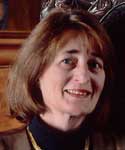
Considering she has become an expert on most topics she investigates, Ellsworth’s creative and enduring contributions in two separate fields are amazing, the citation says. She was one of the first psychologists to undertake a detailed and thorough analysis of the relation between cognition and emotion, uniting two fields that had been considered entirely separate. The cognitive appraisal theory that resulted from this work postulates that emotions reflect patterns of appraisal of the environment, and has been a major factor in the current revival of psychological research interest in emotion. It led to an explosion of research on the influence of appraisal on emotion, the influence of emotion on appraisals and judgment, and cultural similarities and differences in cognition and emotion.
The citation says Ellsworth has conducted the best, most highly regarded, and most broadly useful research within the American academy on the implications of social psychology for American criminal procedure, answering empirical questions over which the courts previously had struggled for decades. The citation says she made respectable a number of socially important problems, such as jury behavior, eyewitness reliability, the application of social science data to judicial decision-making, and issues related to the death penalty.
Ellsworth has published in many genres—empirical studies, theoretical analyses, literature reviews, methodological instruction, surveys of fields of knowledge, criticisms of legal rules and practices and institutions.
An inspiring and always helpful teacher, Ellsworth has shown uncommon dedication to both graduate and undergraduate students, the citation says. She also has been active and reliable in her service on campus.
Distinguished University Professor, David Ginsburg
Dr. David Ginsburg is recognized widely as the world leader in the area of genetic disorders of blood coagulation, his award citation says. In a highly competitive field populated by basic scientists and physician-scientists from around the world, his accomplishments rank at the very top, the citation says. A recipient of internationally recognized awards for scientific achievement, editor of noted scholarly texts and mentor extraordinaire, the citation says, he sets standards of excellence unreachable by all but a few in the academic world.
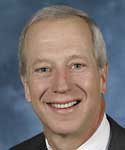
His scholarly achievements have gained him a MERIT Award from the National Institutes of Health (NIH); the E. Donnall Thomas Lecture and Prize from the American Society of Hematology; a U-M Distinguished Faculty Lectureship Award in Biomedical Research; a U-M Distinguished Faculty Achievement Award; election as a fellow of the American Association for the Advancement of Science; and appointment as the Warner-Lambert/Parke-Davis Professor of Medicine. His recent election to the Institute of Medicine in the National Academy of Sciences stands in further testimony to the importance assigned to his many contributions to academic medicine, the citation says.
Ginsburg’s recent discovery of the genetic basis for a life-threatening clotting disorder is only one of his finest achievements; it coincided with his receipt of the International Prize by the Society for Fibrinolysis and Proteolysis, one of the highest honors in the field, the citation says.
Ginsburg has contributed widely to the scientific community through distinguished seminars and other presentations. He has served on the editorial boards of many journals and was president of the American Society for Clinical Investigation. He has also served as chair of the Board of Scientific Counselors of the National Human Genome Research Institute and of the Recombinant DNA Advisory Committee for NIH.
His talents as a teacher are legendary, the citation says, as indicated by his Medical Student Award for Teaching Excellence. He has mentored 12 doctoral students and 23 postdoctoral fellows, while serving on more than 50 thesis committees, and his students have gone on to stellar careers of their own, four on the Medical School faculty. With Professors Thomas Gelehrter and Francis Collins, he is co-author of one of the leading textbooks in medical genetics.
Distinguished University Professor, Rebecca Scott
One of the foremost Latin American scholars in the country, Rebecca Scott is best known for her groundbreaking publications on slavery and on race and the law in post-emancipation Cuba, Brazil and the United States, her award citation says. In 1990 she received the MacArthur Prize Fellowship, and in 2002 she was elected to the American Academy of Arts and Sciences.
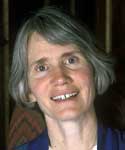
Building on her law and history coursework and research expertise, she is co-organizing, with Professor Martha Jones, a collaborative international research and teaching project, “The Law in Slavery and Freedom.”
Few books in Latin American history have had the impact of Scott’s first, “Slave Emancipation: The Transition to Free Labor” (1985), the citation says. Her contribution to the debate over the causes of the abolition of slavery in Cuba altered scholarship on the subject of slave emancipation. Since that early work, she has been conducting comparative research on post-abolition societies of Brazil, Cuba and Louisiana, and she has collaborated with other scholars to produce deepened insights into slavery, its demise, and the social and political relationships that developed in its wake.
This work and her growing interest in legal history have led to new ways of understanding the significance of the concept of citizenship and its impact on racialized societies, the citation says.
Scott’s new book, “Degrees of Freedom: Louisiana and Cuba after Slavery, 1862-1914,” promises to make a significant contribution to the field of Atlantic studies. A colleague notes that each article she has published, always in premiere journals, has been a “labor of love,” exquisitely crafted, and managing to “capture the voices of forgotten people.”
For excellence in undergraduate teaching, Scott has been named a Thurnau Professor, and she continues to explore new pedagogies in history and law.
She founded and nurtured the Program in Latin American and Caribbean Studies, helping to put U-M prominently on the map in this area. She was chair of the Department of History from 1996-99, and she currently serves as director of graduate studies.
Distinguished University Professor, Bright Sheng
One of the foremost composers of our time, Bright Sheng is a musician whose compositions merge musical customs drawn from his own Chinese heritage with Western conventional musical styles, his citation says. Gerard Schwarz, music director of the Royal Liverpool Philharmonic Orchestra, compares Sheng to Mozart, in his ability to master a great variety of musical genres with originality and imagination.
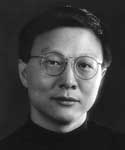
Cited as a prolific and brilliant composer, Sheng has had numerous commissions and opportunities for advancement outside the University. Among his many other works, a new opera was performed at the Lincoln Center Festival in summer 2002, and a second opera was performed in Santa Fe this year. “Song and Dance of Tears,” for cello, piano, and pipa and sheng (performed by Yo Yo Ma, Emmanuel Ax and two Chinese instrumentalists) premiered in March under conductor David Zinman. Sheng also is a conductor and pianist, and he has played a major role as advisor to the Silk Road Project, an international program bringing to light the musical traditions of Far Eastern routes.
Sheng’s music is passionate, complex and direct, yet with a depth of sophistication that rewards repeated hearings, the citation says. His compositions “play a vital role in promoting deeper and greater understanding of our basic humanity,” Ax says. “I am vastly impressed by Bright’s ability to document, recall and conjure up very different kinds of music from specific regions in China,” Yo Yo Ma says. At Ma’s request, Sheng wrote “Three Songs for Violoncello and Pipa,” which was commissioned by and performed by Ma at the White House in 1999.
Sheng’s teaching is marked by an intense interest in the professional development of students and great rigor in his expectations of them. His students appreciate his hands-on approach and his insistence on focus and discipline.
Sheng is a deep reservoir of musical and cultural knowledge about China, a priceless asset in the growing dialogue between East and West, the citation says. In a world still struggling with issues of nationalism and identity, Bright envisions our future by exploring our shared past.
Distinguished Faculty Achievement Award, David Engelke
When David Engelke arrived at U-M in 1983, his work in gene expression already was well known. In his Ph.D. dissertation project he had been the first to isolate and characterize a nuclear transcription factor, his award citation says. In his work here he has continued to analyze gene activation and has become internationally known for his work on RNA enzymes and the processing of small RNAs.
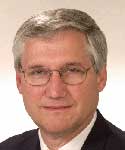
Engelke’s success in the research laboratory is evident in many ways: he has authored scores of peer-reviewed manuscripts and presented many invited presentations at research conferences and symposia; he is sought after as a reviewer and editor in the field of RNA biology and gene therapy; he has done consulting work for several large pharmaceutical companies; he has served on the board of directors for the RNA Society; and he is associate editor of the journal RNA.
His teaching, service and clinical activities underscore his role as a major contributor to the overall academic success of the Medical School, the citation says. He has been a leader in graduate education at the Medical School and has been a key player in creating and implementing a core curriculum and centralized student recruiting.
Engelke’s contributions to interdepartmental and intercampus graduate programs in particular make him stand out, the award citation says. For many years he served on the policy committees for the Cellular and Molecular Biology Ph.D. Program and the Medical Scientist Training Program. Later, as director of that program, he guided it to become a more dynamic and cohesive training program, and since then its strength has increased steadily, the citation says.
As director of the Program in Biomedical Sciences, Engelke encouraged Ph.D. programs to work together to allow flexibility for students, and he enlisted the active participation of graduate student organizations. He has involved himself in a number of issues that affect graduate and postgraduate education and career development. These include the Diversity and Career Development Task Force, a Graduate Parents Task Force, and the Rackham Graduate School Executive Board. Last year he was appointed assistant dean of research and graduate studies at the Medical School.
Distinguished Faculty Achievement Award, James House
A world-renowned scholar, James House is one of the most productive and influential sociologists working today at the intersection of social psychology, health and survey methods, his award citation says. He is one of the University’s most accomplished and effective academic leaders and a dedicated teacher and mentor, the citation says.
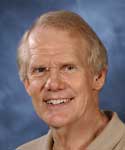
From his early paradigmatic theoretical statement on the “three faces of social psychology” to his later empirically based research on stress and social support, his work is marked by its intellectual reach, clarity of purpose and wide impact, the citation says. Between 1989 and 1995, for example, his first authored work was cited more than 1,200 times, and a 1988 article on “Social Relationships and Health,” published in Science, remains the definitive statement on the topic, the citation says. His recent work on socioeconomic differentials in health and mortality has attracted a great deal of attention not only in the discipline but also in public health, medicine and related fields.
House is a dedicated teacher and highly effective mentor, his citation says. He helped develop a new concentration called “Health and Aging,” and played an important role in obtaining and implementing the Robert Wood Johnson Foundation Health Policy Scholars Program. He has trained numerous graduate students, treating them as junior colleagues and often coauthoring publications with them. His students, many from historically underrepresented groups, have gone on to successful careers at leading universities around the country.
House is a natural leader who has the capacity to bring people together to work constructively and creatively, the citation says. As chair, he guided the Department of Sociology through a difficult transitional period with equal parts vision and grace, the citation says. He then went on to serve for more than a decade as director of the Survey Research Center as it went through a period of dramatic growth and intellectual transformation. He has served on many other committees, including the College Executive Committee and the recent LSA Dean Search Committee.
Among his many honors and awards, he is an elected member of the American Association for the Advancement of Science, the American Academy of Arts and Sciences, and the Institute of Medicine of the National Academy of Sciences.
Distinguished Faculty Achievement Award, John Jonides
John Jonides is one of the most well-respected cognitive psychologists of our era; his international reputation is as a leading scholar, and his scientific contributions are considered first-rate, creative and at the theoretical and methodological cutting edge, his award citation says. His achievements as a scholar are matched by his ability as a teacher and his dedicated service to the college and University, his citation says.

The recipient of numerous awards and funding grants, Jonides has done pioneering work in studying working memory and reliance on frontal cortical functions. In recent years he has collaborated with Professor Edward E. Smith in studying executive functioning, both as a component of working memory and as a set of psychological processes in their own right.
In addition Jonides has led in the development of more analytic methods for using neuroimaging data to study cognition, and he was among the first to propose the acquisition of parametric data from neuroimaging activations as a way of going far beyond the more standard subtraction methodology. He has published in every major journal in his field, and currently he edits the journal Cognitive, Affective, and Behavioral Neuroscience. In a major administrative role on campus he co-directs the University’s fMRI Center, a national model for how to structure a research-dedicated imaging center.
Nationally, Jonides has served the National Institutes of Health (NIH), the National Science Foundation and the Air Force Office of Scientific Research (AFOSR) for nearly 20 years as reviewer, panel member and creator of funding programs. For NIH, he was the principal architect of the new funding program in cognitive neuroscience, and in the late 1980s and early 1990s, he created and oversaw a funding program concerned with cognition for AFOSR.
As associate dean of research and facilities in LSA, Jonides was the faculty force behind the creation of the Undergraduate Research Opportunity Program, which has been copied throughout the country. He helped develop the program and has been diligent in including undergraduate students in his own research work and guiding them to become mature scientists. He is a much-admired graduate student mentor and a superb lecturer whose first-year course on Mind and Brain is demanding but popular, the citation says.
Distinguished Faculty Achievement Award, William Paulson
Since coming to U-M in 1986, William Paulson has established himself as one of the world’s most creative, accessible and instructive readers of literature from the French Enlightenment and French Romanticism, his award citation says. Two books and numerous articles on major figures in French intellectual history first established his prominence, and his translations of the works of Michel Serres are much valued additions to scholarship, the citation says.

Interspersed with these works are books in which Paulson has ranged more widely, providing a new vision for the humanities and suggesting a series of strategies whereby humanities disciplines can reintroduce themselves to the world of practical affairs without losing their integrity, the citation says. His most recent book, “Literary Culture in a World Transformed: A Future for the Humanities,” has been called “the bible in what is becoming a very important movement.”
In this book as well as in the earlier “The Noise of Culture,” Paulson suggests that literature can help equip us to comprehend and make healthy decisions in an ambiguous and complex world. In the provision of stories, he says, literature can enable us, individually and privately as well as collectively and publicly, to imagine sustainable futures.
Paulson’s eye toward inventing forms of knowledge that can live practically in the real world is evident in the commitment he carries through in his teaching, the citation says. In 17 years in the Department of Romance Languages and Literatures, he has taught more than 30 different courses, at all levels.
As chair during a critical period from 1992-97, Paulson played a pivotal role in guiding the department through an intense transition, the citation says. The strong department that emerged from this transformative period bears the marks of his compassionate and visionary leadership. Shortly after stepping down as departmental chair, he assumed the position of graduate chair, where he worked even more tirelessly and creatively, the citation says. Students and colleagues are unanimous in praising his compassion, fairness, commitment and imagination in developing new ideas and opportunities for graduate students, the citation says.
Distinguished Faculty Achievement Award, Robert Smith
Robert Smith is an indefatigable and perceptive operations researcher, mathematician and scholar, his award citation says. Overriding all his efforts is a commitment to scholarship and quality. Legendary for insisting on complete and well-supported rigor in all aspects of his and his co-workers’ analyses, he also has been able to communicate successfully with industrial and commercial users of the various methods he has developed, coming up with apt examples and clarifications of otherwise daunting techniques, the citation continues.
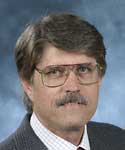
Smith has produced seminal research in a variety of areas: infinite horizon optimization, capacity expansion, the foundations of dynamic programming, and the modeling of large-scale distribution and transportation systems. In the 1980s, he developed and analyzed an algorithm for global optimization called the “hit-and-run” algorithm. He since has developed several extensions of this algorithm. He has received the Research Excellence Award from his department four times since 1992-93, and the College of Engineering Research Excellence Award in 1999-2000.
The recipient of an Outstanding Teacher Award, Smith is, likewise, one of the most effective teachers in the college, his citation says. He consistently has received top teaching evaluations. His clear interpretations of fundamental concepts and his ability to break down complicated ideas into simple parts make his presentations both informative and captivating, the citation says. He attracts the strongest and most productive graduate students, the citation says, and he has supervised more than 20 doctoral students since coming to U-M in 1986.
He has been director of the Dynamic Systems Optimization Laboratory for many years. He has served on many departmental and college committees, and he was a member of the Senate Advisory Committee on University Affairs (SACUA). His colleagues say he is steadfast in expressing opinions about important matters such as academic freedom, bureaucratic malfeasance, and student obligations to take their lives and work seriously. He can be counted on to provide a principled and uncompromising polar position by which to take one’s own bearings, the citation says.
Smith has an international reputation for creative and high-quality contributions to the body of knowledge within his field, and he excels as a classroom instructor and mentor for doctoral students, the citation says.
Faculty Recognition Award, David Mooney
It is obvious from his curriculum vitae that David Mooney’s achievements are outstanding and that he is in a class of his own for the depth, breadth and extent of his teaching, research and service, his award citation says. It is not often that an individual can excel in each of these areas; Mooney is exemplary in all of them. His joint appointment with Dentistry and Engineering enhances his value to the University with respect to the growing need for fostering critical interdisciplinary programs, the citation says.
Mooney’s particular expertise has come from his unique ability to combine scientific and technical attributes from the fields of chemical engineering, cell biology, materials science and what might best be called clinical biology, the citation says. He has established himself as one of the world leaders in the fields of tissue-engineering and biomaterials, and he has, in less than 10 years, been extraordinarily productive, with more than 100 peer-reviewed publications in the most important journals in his field and numerous invited lectures around the world, the citation says. His stature in his field is reflected by his past and current positions in numerous scientific societies.
With more than $7 million in new research funding for projects in which he is the principal investigator or co-investigator, Mooney has had great success in translating his scientific findings into clinically important therapeutic strategies, the citation says. He has a number of patents that have been licensed to companies in support of the development of tissue engineering products and has served on a variety of advisory boards in the industry.
Since coming to U-M in 1994, Mooney has been an effective teacher and mentor, developing many courses in the College of Engineering and the School of Dentistry; mentoring undergraduate, dental, graduate and doctoral students from LSA, Engineering, the Medical School and the School of Dentistry; and mentoring a large number of postdoctoral fellows. Students consistently praise the high quality, significance and impact of his teaching.
Mooney has served on departmental search committees as well as on the School of Dentistry’s Appointments, Promotions, and Tenure Committee, and he was a member of the University’s Faculty Advisory Committee for the Life Sciences Initiative.
Faculty Recognition Award, Patricia Reuter-Lorenz
Patricia Reuter-Lorenz is a national leader in cognitive neuroscience, her award citation says. She was a founder of the premier professional organization in that field, the Cognitive Neuroscience Society, and still serves on its Board of Governors. She is a key leader of the cognitive neuroscience program in the Department of Psychology, the citation says.
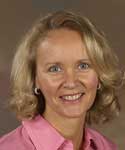
As one of the world’s leading experts in cognitive neuroscience, she works on brain organization and cognitive function, focusing her empirical research on the study of attention, working memory, executive mental processes, emotion, cerebral hemispheric specialization and neurocognitive aging, all of which are important psychological areas for everyday human activities. Her colleagues in these fields describe her work as insightful, methodical, integrative and innovative.
Reuter-Lorenz is a stellar teacher in every setting, whether in formal classes at the undergraduate and graduate levels or as an informal research supervisor, the citation says. A feature of Reuter-Lorenz’s excellence as an undergraduate teacher is her dedication to helping graduate student instructors learn how to teach by engaging them in developing new course materials, motivating them to help each other with specific pedagogy suggestions, the citation says. Students who have worked with her in research emphasize her enthusiasm for the substance of the work, her high expectations of them, her support of independence and achievement, her accessibility, and her interest in their lives both in and out of the lab. She is one of the department’s most sought-after individual research supervisors, the citation says.
Reuter-Lorenz’s service to the department and to her field includes her roles as chair of the Cognitive and Perception Area in the department; member of the departmental executive committee; and co-chair of the cross-area search committee charged with hiring a cognitive neuroscientist capable of bridging cognitive, biopsychology and developmental areas. She has played an essential role in selecting graduate students by serving as a member and chair of the graduate admissions committee and chair of the graduate recruitment committee. She has organized national symposia and meetings and has played a large role in the Summer Institutes for Cognitive Neuroscience, which has educated a generation of new cognitive neuroscientists and re-tooled established researchers.
Faculty Recognition Award, Karen Smith
Karen Smith has been spectacularly successful as a researcher in the field of commutative algebra and algebraic geometry, her citation says. Since receiving her doctorate from U-M in 1993, she has established herself as the world’s leading figure at the boundary of commutative algebra and higher dimensional geometry, the citation says.
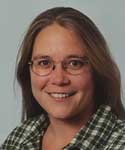
In recognition of her research, Smith has won several awards, including the Ruth Lyttle Satter Award from the American Mathematical Society, a Clay Foundation grant, and continuous support from the National Science Foundation since 1993. Last year she was invited to spend a year at the Mathematical Sciences Research Institute in Berkeley as co-organizer of a Special Year in Commutative Algebra.
Smith has the ability to get people at all levels involved in a program of research and scholarship, her citation says. She is a superb lecturer, and she has garnered a reputation for making complicated material accessible to a wide audience, the citation says. Her monograph, “An Invitation to Algebraic Geometry,” is a good example of her ability to explain a difficult and intimidating subject, the citation says.
Smith has contributed a steady stream of articles to top mathematical journals, written four book chapters, co-authored two books and edited another. She is editor of five mathematical journals.
Smith’s commitment to teaching and mentoring began with her decision to spend a year before graduate school as a high school teacher, and continued with the Outstanding Teaching Assistant Award that she received as a graduate student. As a classroom teacher at U-M, she has compiled an enviable reputation and evaluation ratings at the top of the scale, the citation says. Since joining the faculty in 1996, she has supervised six Ph.D. students.
Smith has taken a particular interest in the underrepresentation of women and minorities in mathematics and is a mentor to women and minority students. One of her major accomplishments at U-M has been the founding and continued organization of the department’s Marjorie Lee Browne Colloquium, held each year since 1999 on Martin Luther King Jr. Day, an event that has drawn national attention. The citation notes that she combines a “world-class career in research” with a deep commitment to education at all levels and to the institutional needs of the Department of Mathematics.
Faculty Recognition Award, Michael Schoenfeldt
Since joining the faculty of the Department of English in 1985, Michael Schoenfeldt has become one of the leading figures in the eminent and established field of 17th-century studies, his award citation says. His scholarly work is influential and widely admired, his teaching is popular and highly rated, and his departmental and University service has given permanent institutional form to his many intellectual and pedagogical contributions, the citation says.
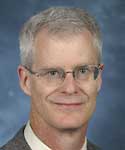
Although Schoenfeldt gained considerable attention with his first book, “Power and Prayer,” a study of early modern poet George Herbert, his second book has been most influential. “Bodies and Selves in Early Modern England” is called a strikingly original analysis of conceptions of subjectivity in the English Renaissance, the citation says. He is the author of numerous additional publications and has been much in demand as a speaker.
One of the most versatile and engaging teachers in the English department, the citation says, Schoenfeldt consistently receives almost perfect scores on student evaluations. He has taken on a large burden of graduate teaching, advising and mentoring over recent years, and his students comment on his warmth, enthusiasm and ability to foster close-knit bonds among his students. An indication of the quality of his mentoring is that a dissertation he supervised won the Rackham Distinguished Dissertation Award.
Over the course of his career, the citation says, Schoenfeldt’s most significant professional accomplishments might be administrative. He has helped revise the honors program in English and developed a new and successful course in thesis writing that has improved the quality of honors theses dramatically.
Furthermore, under Schoenfeldt’s direction, the Program in Medieval and Early Modern Studies has become a considerable intellectual force in the college, the citation says. He has made the content of the program more flexible, demanding and responsive to the global contexts of the period, and he developed a graduate certificate in Medieval and Early Modern Studies for students in a wide range of disciplines. His citation calls him an outstanding faculty member and exemplary scholar, teacher and mentor.
Faculty Recognition Award, Michael Wellman
Michael Wellman is recognized worldwide as a leader for his research in market-oriented programming, decision-making under uncertainty, and more generally on economic approaches to artificial intelligence. As a teacher he has been responsible for the revitalization of the artificial intelligence (AI) curriculum at U-M, his award citation says. While making substantial contributions to his scholarly field of inquiry and to students, he has devoted a significant amount of time to serving the University in other ways. He has been, his citation says, the model of an outstanding scholar, educator and academic leader.

Wellman has made several widely acclaimed and fundamental contributions to research in AI, the citation says. His early work was on qualitative probabilistic reasoning. Later, his most important work addressed the use of economic models in AI, and, more generally, as models for distributed computation. His most recent papers on auction mechanisms again launch a new direction of inquiry in the field of computational economics that is influencing academic work as well as e-commerce practice, the citation says.
Excelling also as a teacher and mentor, Wellman is a much sought after and successful doctoral advisor whose students attest to his impact on their lives and careers, the citation says. It is notable that he created the innovative E-Commerce course and succeeded to a large degree in presenting a coherent view of a key emerging field at the intersection of scholarship, technology and commerce, the citation says.
Wellman’s service contributions have grown steadily in scope. In 2001 he assumed leadership of Michigan’s Artificial Intelligence Laboratory, a large research unit that boasts a nationally recognized collection of diverse and loosely coupled scholars who, collectively, raise several million dollars a year in grants and contracts. Beyond directing the lab, Wellman has worked to increase its national visibility. US News & World Report recently ranked Michigan in the top 10 for AI.
Wellman recently took office as the first elected chair of the Association for Computing Machinery’s Special Interest Group on E-Commerce (SIGecom). As the leading Computer Science organization in e-Commerce, SIGecom promotes the informed development of principled technique and practice in this emerging field.
Amoco Undergraduate Teaching Award, Trachette Jackson
Although Trachette Jackson joined the faculty only three years ago, she already has had a tremendous impact on the Department of Mathematics, particularly in its development of an undergraduate and graduate program in Mathematical Biology, her award citation says. She rewrote the requirements of Mathematical Biology to make them more coherent and engaging, and served as an undergraduate advisor, with a special emphasis on Mathematical Biology students, the citation says.
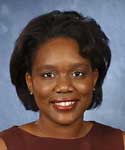
Mathematical modeling of phenomena in the biomedical sciences is one of the fastest growing areas in applied mathematics, and Jackson is interested in the application of mathematics to tumor biology, chemotherapeutic strategies and cell signaling. In working with the Research Experience for Undergraduates program, Jackson guided her student research partner in developing a mathematical model to investigate the growth, immune escape and treatment of tumors. This led to the student’s presentation of her research at the Annual Undergraduate Women in Mathematics meeting.
In all the courses she has taught while at U-M, Jackson has received stellar instructor ratings. Her students have been lavish in expressing their commendations, commenting on her clarity in presenting difficult material, her willingness to help at any time, her active interest in her students’ careers, and her mathematical insight and ability, the citation says.
Jackson established the Introduction to Mathematical Biology course and has involved her students in hands-on work in ways that her colleagues envy, teaching them to use computer simulations that add real-world complications to mathematical models in biology, ecology and medicine, the citation says. She also has taught in the Michigan Math and Science Summer Scholars program for high school students.
Jackson has many publications and invited presentations to her credit and has been the recipient of several awards, most recently an Alfred P. Sloan Research Fellowship and a WWNF Career Enhancement Fellowship for Junior Faculty.
Her award citation says she is changing the way applied mathematics is taught at U-M and is getting students excited about learning mathematics. It also says she repeatedly has demonstrated that she can combine excellent teaching with outstanding scholarship.
Amoco Undergraduate Teaching Award, Karin Martin
Karin Martin is a highly accomplished, award-winning teacher in the Department of Sociology who has taught successfully at all levels of the undergraduate program from the largest introductory classes through the small honors seminar. Her courses, some of which are cross-listed with Women’s Studies, are carefully thought out, well organized, engaging and intellectually stimulating, her award citation says.
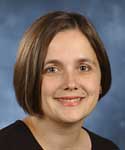
Since coming to U-M in 1995, Martin’s degree of mastery in communicating with a large body of undergraduates has earned her their respect and appreciation, and her mentoring of more than a dozen graduate student instructors has had positive effects far beyond what she could accomplish individually, the citation says.
Martin’s success in the classroom—whether she is lecturing to 250 students or leading a seminar of 10 honors students—stems from her ability to see the world of knowledge through the eyes of her students, the citation says. This is reflected in her undergraduate syllabi, which include readings designed to engage students who might not otherwise be interested in a particular subject. In her effort to make complex material and ideas accessible, she constructs assignments that capture students’ imagination, opening them up to new ways of thinking about and understanding the social world. Rather than simply encouraging students to absorb new information, she works to instill habits of critical thinking.
A conscientious and effective mentor for undergraduates, the citation says, Martin has directed the honors program in sociology for two years, mentored six undergraduates through independent study courses and supervised a dozen honors theses. She has served as director of the undergraduate program, and in her brief tenure in that position introduced a number of programmatic improvements to enhance the quality of the undergraduate experience.
Martin is the author of numerous articles and has had many invitations to present her research. In 1998 she received U-M’s Excellence in Education Award. Her citation says she is a “flexible and innovative teacher with a remarkable capacity for connecting with students,” and notes she is a “major contributor” to the teaching mission of the Department of Sociology, the Women’s Studies Program, LSA and the University.
University Press Award, Linda Gregerson
In “Negative Capability: Contemporary American Poetry,” Linda Gregerson presents an eloquent overview of the contemporary American lyric, her citation says. The book, winner of the 2003 University Press Award, examines the work of John Ashberry, Mark Strand, Louise Gluck, James Schuyler, Muriel Rukeyser, C. K. Williams, Rita Dove, Philip Levine, Heather McHugh, William Meredith, John Hollander and others. An award-winning poet, acclaimed literary critic, and teacher of poetry, Renaissance literature and creative writing, Gregerson was honored in 2002 with an Academy Award in Literature from the American Academy of Arts and Letters and in 2003 with the Kingsley Tufts Award in Poetry.
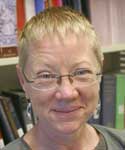
In its scruples and reservations as in its discriminating explanations, her award citation says, “Negative Capability” unearths the contours of a distinctive American poetic tradition.
“Men and women of widely divergent cultural backgrounds, aesthetic persuasions, skepticism and registers of voice,” she says, “have produced in recent decades an American lyric of unprecedented variety and abundance.” This contemporary American lyric is rich in discipline as well as depth and is distinguished, Gregerson argues, by its persistent and supple engagement with form.
In a wide-ranging and fiercely intelligent series of readings, the award citation says, Gregerson documents the depth and richness of American lyric production at the turn of the 21st Century. The book is a rich symbiosis of critical and poetic intelligence that is of vital interest to those interested in the current state of American poetry: practicing poets, readers and students of literature and literary criticism, and professional critics, the citation says.
Gregerson’s previously published work includes three poetry collections: “The Woman Who Died in Her Sleep” (1996), “Fire in the Conservatory” (1982) and “Waterborne” (2002), as well as a book of criticism, “The Reformation of the Subject: Spenser, Milton, and Protestant Epic” (1995). Her poems, essays and reviews have been published widely in magazines and journals. She has received many awards, including a Guggenheim Fellowship, the University’s Distinguished Faculty Achievement Award, a Michigan Humanities Award, National Endowment for the Arts grants, and an Ingram Merrill poetry grant. Her award citation says “Negative Capability” is a book of passionate advocacy for current American lyric poetry with an “incisive and penetrating critique” of contemporary poems.
Distinguished Faculty Governance Award, Charles B. Smith
The list of service accomplishments accrued by Dr. Charles Smith includes service in numerous capacities with University-wide committees; with collegiate and departmental committees; with local, national and international professional societies; and with Ann Arbor and Detroit public school system committees, his award citation says.
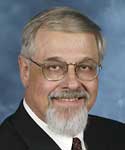
After joining the Department of Pharmacology at the Medical School in 1966 as assistant professor, Smith was promoted to associate professor in 1970 and to professor in 1974. From 1981-87, he was director of the Neural and Behavioral Science Program. His major research interests have included central nervous system pharmacology, biogenic amines, biology of depression and mechanisms of antidepressant drugs, opioid receptors, and hypertension and hypertensive agents.
During his long career at U-M, Smith has served on SACUA, the Senate Assembly and on virtually every Assembly committee. In those capacities, he has been responsible for a number of definitive written reports on the nature and welfare of faculty members, and he was an advocate for important studies on the status of women, minorities and part-time faculty—which SACUA brought to the attention of the University community. He now serves as chair of the Budget Study Committee and as a member of the General Counsel Advisory Committee.
Smith has been involved actively in University-wide service to faculty through his membership as an officer of the U-M/Ann Arbor Chapter of the American Association of University Professors (AAUP), serving as the chapter’s secretary and playing a leadership role in his advocacy for strong faculty governance and improvement of the condition of faculty, students and staff, the citation says. As chair of the Committee for a Multicultural University, he issued statements of support for the pro-affirmative action position of the University.
Smith also has been an officer of the U-M Chapter of Sigma XI, The Scientific Research Society. Indicative of his dedication and sensitivity to programs for underrepresented groups, the citation says, he served for more than a decade on the Advisory Committee of the U-M Program in Scholarly Research for Urban and Minority High School Students.
Jackie Lawson Memorial Faculty Governance Award, Donald Bord Donald Bord
joined U-M-Dearborn as associate professor of physics in the Department of Natural Sciences in 1984. In 1992 he was promoted to professor, and from 1990-93 he served as chair of the department. He also has served as associate dean for planning and faculty development and as interim dean of the College of Arts, Sciences, and Letters.
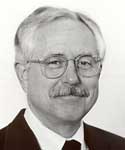
From 1989-93, Bord was a member of the Senate Assembly, and in 1991 he was elected to a three-year term on SACUA; he was vice chair of SACUA in 1992-93, the first faculty member from a regional campus to serve in that capacity.
As a member of SACUA, Bord proved himself to be a careful thinker who presented issues in an articulate and engaging manner, his citation says. He was a positive representative of and for the regional campuses and was able to blend the interests of regional campuses with those of the Ann Arbor campus, the citation says. He demonstrated similar skills as a member of the Division II Rackham Fellowship and Grants Review Committee from 1996-98.
Bord has been an active participant in Dearborn campus affairs, serving on numerous committees at the departmental, collegiate and campus levels, including the Chancellor’s Scholarship Awards Committee; the Chancellor’s Mission Statement Revision Committee; the Chancellor’s FUTURES Council Internal Scan Team, which he chaired; the College Administrative Council and College Executive Committee; the Dean’s Search Advisory Committee, which he chaired; the College Academic Judiciary Committee; the Natural Sciences Executive Committee; the Natural Sciences Grievance Committee; and the Natural Sciences Learning Center Steering Committee; and more.
Like Jackie Lawson, for whom this award is named, Bord has been a dedicated and effective leader in the governance activities of the University as a whole, the award citation says.
Regents Award for Distinguished Public Service, Billy “B. J.” Evans
For many years, Billy Evans has been active at the University, in the state, and in national and international arenas, committing himself in the field of education with zeal, his award citation says. He has worked tirelessly to engage students and inspire them to continue their study of chemistry, the citation says. His accomplishments have been rewarded on many levels: the American Chemical Society has recognized his work with a National Award; in 1996, he received the Catalyst Award from the Chemical Manufacturer’s Association; and in 1999, President Clinton presented him with the Presidential Award for Excellence in Mentoring. In 2000, Evans received the Giant in Science Award from the Quality Education for Minorities Network and was among the first honorees to receive the University’s Dream Keepers and Harold Johnson Diversity Awards.
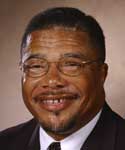
From 1981-96, Evans devoted himself to the Program in Scholarly Research for Urban and Minority High School Students. The program produced the only winners of the Westinghouse Science Competition for the city of Detroit. There were more winners during these 15 years than in the previous 40. Students from this program, many from extremely disadvantaged backgrounds, entered college, graduate schools, law schools and medical schools in record numbers.
Evans has been a member of the Phoenix Memorial Project at U-M, and he has served on the Board of Governors at the Cranbrook Institute of Science. He has done extensive work in the Inkster Public Schools and the Detroit Public Schools, especially in their science programs. He has served as a judge of many local and national science fairs, as president of the U-M Research Club and as a speaker in the Sigma XI national program of Distinguished College Lecturers.
A regular participant in the Chemical Sciences Roundtable of the National Research Council, Evans also served as a member of the Committee on Professional Training of the American Chemical Society and the Board of Governors for the National Conference on Undergraduate Research. Currently he is a member of the Advisory Committee for implementing the assessment of the National Science Foundation (NSF) under the Government Performance and Results Act, an activity he led as chair of the Advisory Committee for the Physical Sciences Directorate of the NSF.
Regents’ Award for Distinguished Public Service, Scott Kurashige
Scott Kurashige is a scholar whose work in the classroom, in professional scholarly settings, and in many local and national communities embodies the ideal of the citizen scholar, his award citation says. In his three years at the University, he has compiled an extensive record of service. Last year, for example, when he was officially on leave, he organized the keynote lecture of the Martin Luther King Symposium, acted as faculty coordinator of the Global Intercultural Experience for Undergraduates Detroit Program, and served as a member of the Diversity Council, an advisory board chartered by President Mary Sue Coleman.
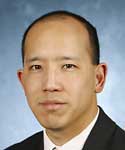
Kurashige’s service work is driven by his scholarship, the citation says. He brings a sharp, critical and theoretically sophisticated mind to all of his work, but his dedication to critical theory does not confine him to an exploration of history bound by classrooms and conferences, the citation says. His service on and off campus is guided by a passionate commitment to social justice and to faith in the power of scholarship to make social change, the citation says.
A catalog of some of his off-campus commitments suggests the range and quality of the activities to which he devotes an average of 15-20 hours each week: he is a member of the board of directors of the James and Grace Lee Boggs Center to Nurture Community Leadership; a member of the board of directors of the American Citizens for Justice/Asian American Center for Justice; a member of and volunteer with the Japanese American Citizens League; a volunteer with Detroit Summer, a multicultural, intergenerational youth movement; a volunteer with the Association of Chinese Americans Detroit Chinatown Drop-In Center, from which he received a Volunteer of the Year Award; and many more.
For his many service activities inside and outside the University, Kurashige has received numerous awards and grants, and he has been a guest lecturer or presenter at countless symposia and conferences. The citation notes that he is a scholar “who is working to build a diverse democracy.”
University Librarian Achievement Award, Jean Loup
In her long career at Michigan, Jean Loup has been a role model for her colleagues and is recognized as a leader by faculty and by her local and national library peers, her award citation says.
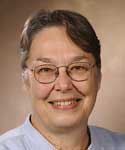
She has brought energy and enthusiasm to her work, and through campus-wide leadership roles, she has had an impact on a generation of librarians at Michigan, leading them to engage in the intellectual life of the campus, the citation says. In 1995, she received U-M’s President Medallion.
Loup’s first position in the University Library was head of the processing section in Technical Services, and she recently retired from an appointment as Special Collections Librarian. Among other roles, she served as reference librarian in the Graduate Library, acting head of the Science Library, head of the Documents Center, acting head of the Public Health Library, head of Communications, Public Relations, and Grants, and assistant to the director. In her assignments in almost every sector of the University Libraries, she always was ready to take on new challenges, and she provided quiet leadership marked by persuasion, determination and respect for individual differences, her citation says.
As head of the Documents Center, Loup initiated efforts in the digital area, and the national recognition that the center enjoys today is partially a result of the solid foundation she put in place, the citation says. She also was a critical member of the task force whose recommendations about public access to government information in electronic format continue to stand as valuable guidance for the Association of Research Libraries, the citation says.
Through her many committee assignments, she always was a steadfast supporter of librarians as important members of the academic community, and she was one of the primary movers behind the University Library’s current peer review process for librarian promotions. She served as president of the campus chapter of AAUP, co-chair of the Academic Women’s Caucus, and chair of the Academic Affairs Advisory Committee. She was elected library delegate to the Faculty Senate Assembly and served two terms on SACUA, being named vice-chair during her first term and chair in her second term.
University Librarian Recognition Award, Susan Hollar
As head of the Knowledge Navigation Center (KNC) at the University Library, Susan Hollar has taken the initiative to work with faculty, staff and students in developing innovative services that integrate information technology resources into teaching and learning activities. She has provided the campus with great leadership and vital bridging on issues related to the convergence of technology and traditional library assistance. Without her vision, leadership and energy, the University Library would not be as able to meet the information needs of the campus community, her award citation says.
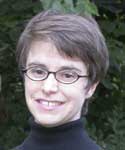
In taking the KNC from little more than an idea to its current role as one of the most recognized and successful technology education and support units on campus, Hollar has proved herself a skillful and outstanding manager, the citation says. Her ability to perceive emerging needs of students and faculty in a constantly changing technology environment and to develop service and programmatic responses is unequaled, the citation says. Perhaps most impressive, according to the citation, has been her demonstrated ability to mentor and guide staff, from undergraduate students to library associates and librarian and support staff.
Hollar is responsible for establishing educational, programmatic and service directions to meet campus needs. She coordinates the technology environment to meet a complex set of technology needs, and in the Graduate Library’s demanding research environment, she provides direct reference assistance to patrons in social sciences and humanities. In her teaching role she develops instructional programs and workshops to help the campus integrate technology in their learning and teaching, both through the KNC and as part of campus learning technology collaborations.
As a leading expert in learning technology for the library and campus, Hollar was instrumental in forming the cross-campus Teaching and Technology Collaborative and in helping develop the Enriching Scholarship Conference, the citation says. She also contributes on a national level to the vision of how academic libraries can help their campuses adopt new and meaningful learning technologies. She has demonstrated steady professional growth and contributions to the profession through publications, presentations and professional collaborations, the citation says.
Distinguished Research Scientist Award, Michael Combi
Michael Combi has made numerous wide-ranging and important contributions to the fields of planetary and space science research, particularly in the area of cometary research, in which he is recognized as a world leader, his award citation says.
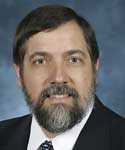
He has over many years contributed leadership and brought important national and international visibility to U-M through his high-quality and high-impact research and his broad collaborations and partnerships, and he has become a well-known and highly quoted spokesperson for his field of research.
Combi came to the University in 1989, already having developed an independent and fully supported research program, support he has maintained throughout his 13 years here. His research has focused on bridging the gap between observational data and theoretical modeling by constructing an evolutionary series of models for comet atmospheres that are useful in the direct analysis of observational and in situ spacecraft data. He is sought out by and has established a number of collaborations with leading observers around the United States and Europe, and he has led two of his own space-based observing programs.
On behalf of the entire planetary science community, he was selected this year to lead the production of a white paper on cometary science, as input to the National Research Council’s Solar System Exploration Decadal Survey, which will help determine which planetary missions will fly in the next decade. He also has been selected by professional colleagues as a co-investigator on many planetary mission investigations.
Combi has been active in service to the University community and in U-M’s educational mission. He provides academic service to his department, the College of Engineering and the University, and he has responded to countless invitations to present his scientific results at conferences and meetings. He has been one of the most visible scientists promoting cometary research in the country, his citation says.
When two bright comets were visible in the skies over the Northern Hemisphere in 1996 and 1997, radio and newspaper interviewers around the country sought his expertise and commentary.
Research Scientist Achievement Award, Khalil Bitar
By any criteria, Khalil Bitar would be considered an outstanding scientist and leader in the field of gastrointestinal research, his award citation says. He is a world-class investigator whose success is evident in the extensive funding he has received.
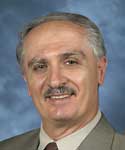
He has an innovative view not only of smooth muscle physiology but of cell biology in general, and his critical thinking is evident through his papers in top-level journals and presentations at national and international meetings, his citation says.
As an integral part of a laboratory dedicated to the study of gastrointestinal motility, Bitar has been instrumental in developing and sustaining the general direction of investigative efforts in the Division of Pediatric Gastroenterology. His research interest lies in determining the role of neuropeptides in the regulation of smooth muscle activity in the gut. His greatest contributions have come through his development of techniques to disperse and isolate smooth muscle cells from the gastrointestinal tract, and in understanding the receptor and postreceptor events that lead to the activation of smooth muscle activity by neuropeptides. His original studies are considered classics in his field, the citation says.
Always an advocate for collaborative efforts, Bitar currently is involved with others in pioneering research in the transduction of signaling molecules affecting motility of the GI tract. This research will examine different signal transduction pathways during growth and development and during normal adulthood, and is likely to be of particular relevance to understanding problems in gastrointestinal function that occur in the aging process.
Prior to coming to U-M, Bitar, a graduate of the American University of Beirut, spent three years organizing the Department of Physiology in a new College of Medicine at the Arabian Gulf University in Bahrain, and he continually is sought after by his peers for his judgment and advice. As a leader in the field of gut motility, he co-organized the American Motility Society meeting, and recently he was asked to serve as chair of the Neurogastroenterology Society meeting.
An innovator in the field of gastrointestinal research, both before and after joining the faculty of U-M, Bitar has done state-of-the-art research and has been an important resource to the Medical Center, the citation says.
Research Scientist Achievement Award, Daniel Goldman
Daniel Goldman is an extremely talented neuroscientist, biochemist and developmental biologist, his citation says. With his demonstrated commitment to scholarship and science, he already has made significant contributions to an understanding of the brain, and he continues to take on exciting scientific questions, addressing them in a bold manner and using state-of-the-art approaches.
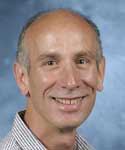
Goldman’s long-term research interest is in the interaction of nature and nurture in establishing how nerves interact with other cells during and after development. His early studies confirmed, at the molecular level, that nerve activity influences the establishment of the neuromuscular junction during development. This work prepared him well for his success in answering the more complex question of how synapses form within the central nervous system. His work has taught the field a great deal about the mechanisms that control the activity of genes involved in establishing critical synapses and in adapting and responding to environmental demands and insults, the citation says.
The current research that Goldman has embarked on represents a pioneering direction that holds promise for advances in the understanding of neuronal development and regeneration, his award citation says. For his successful leadership in uniting the efforts of six laboratories throughout the University into a common interest group, he was awarded a Life Sciences Corridor grant. The major collaborative program he established focuses on the use of zebrafish in addressing fundamental questions about how the brain is built, how it develops, and how it adapts and reshapes itself. The key approaches he has developed toward understanding these difficult questions are extremely thoughtful and likely to yield impressive results that eventually will have important clinical implications for humans, his citation says.
Goldman’s scientific standing can be inferred from his continuous funding from a variety of federal and non-federal sources. His publications are of the highest quality and have appeared in highly respected journals. For his outstanding contributions he has received many awards, including a University Research Scientist Recognition Award in 1994. Last year he was named a Wilson Scholar. He also has been a highly visible and enthusiastic member of the biological chemistry faculty, accepting as much responsibility as full-time academic appointees, the citation says.
